IRENE KELLEHER · MARTIN CONDON · CIARAN BERMINGHAM · ALAN RIORDAN · AND MOREMADE FOR THE 90TH ANNIVERSARY OF THE IRISH FOLKLORE COLLECTIONSCROLL TO EXPLORE ↓
01 / THE WAKE
A SHORT THAT TRAVELLED
CORK INTERNATIONAL FILM FESTIVALSpecial Mention, Best Cork Short · 2025BEARA FILM FESTIVALBest of the Fest · 2026BEARA FILM FESTIVALBest Cinematography · 2026
01 / THE STORYNINE MINUTES. STAY WITH IT.
Some customs are kept for a reason.
A rural Irish cottage. A widow sits through her husband’s wake, surrounded by neighbours and old superstitions. Then one of the customs is broken.
That is as much as you need to know before pressing play.
A short film can ask for very little of your time and leave you with a great deal to think about. Give this one its nine minutes. Then come back to the people and choices behind it.
02 / THE SCREENING ROOMTHE FULL FILM. NOT THE TRAILER.
A little time. Your full attention.
Head First 2025 / 9 MIN
A horror film. Themes include death, grief and the supernatural.
CASTME / NOW SHOWINGHEAD FIRST
PICTURE & SOUND / BEST EXPERIENCED TOGETHER
Pressing play loads YouTube’s privacy-enhanced player. No player loads before that. Prefer to watch there? Watch on YouTube ↗
No CastMe account needed.
03 / HOW IT CAME TOGETHERAN INDEPENDENT IRISH PRODUCTION
A small film. An old world to bring back.
Seán Breathnach shared the story of the film with CastMe: how a burial custom became a screenplay, and how photographs from Matt Sullivan’s research shaped the shoot.
01
Feet first, through the door.
Matt Sullivan came across a belief about the last journey out of a house: carry a coffin feet first. Taken head first, the dead person might look back, remember the house and find their way home. That possibility gave Matt his starting point for the screenplay.
02
Writing the wake.
Matt researched Irish burial customs and the meeting of Catholic practice and older pagan beliefs. He and Seán had talked about making a film together. Matt brought the historical research and his eye as a cinematographer; Seán worked on the script and with the actors, drawing on his experience directing horror.
03
A photograph you can sit inside.
The black-and-white image and the nearly square 4:3 frame came from historical photographs Matt found during research. Look at how long a composition holds: the filmmakers wanted the stillness and deliberate arrangement of early Irish photography.
04
Building the wake in Kerry.
A local carpenter made the coffin for the shoot. Family members joined the extras, and a largely Cork-based crew travelled to Kerry. Irene Kelleher and Martin Condon lead the cast as Nonie and Thade.
05
Passing the custom on.
Matt Sullivan calls the film a “Trojan horse of culture”. A young viewer can come for the horror and leave knowing why someone might pause at the threshold and turn a coffin around.
06
Finding its audience.
The 70th Cork International Film Festival gave it a Special Mention in the Best Cork Short award in 2025, praising its “remarkable directorial flair”. In 2026 it won Best of the Fest and Best Cinematography at the Beara Film Festival, and won Best Horror Film, Costume Design and Score at the Underground Cinema Film Awards. It was also nominated for Production Design.
04 / INSIDE THE SHOOTPHOTOS SUPPLIED BY THE FILMMAKERS
Two days in Kerry. Six weeks in the dark room.
Seán Breathnach shared these photographs from the set and the grade, including two taken by production assistant Gearóid Murphy. Read together, they show how an old stone cottage, an orange coffin and a modern road became a black-and-white wake from another century.
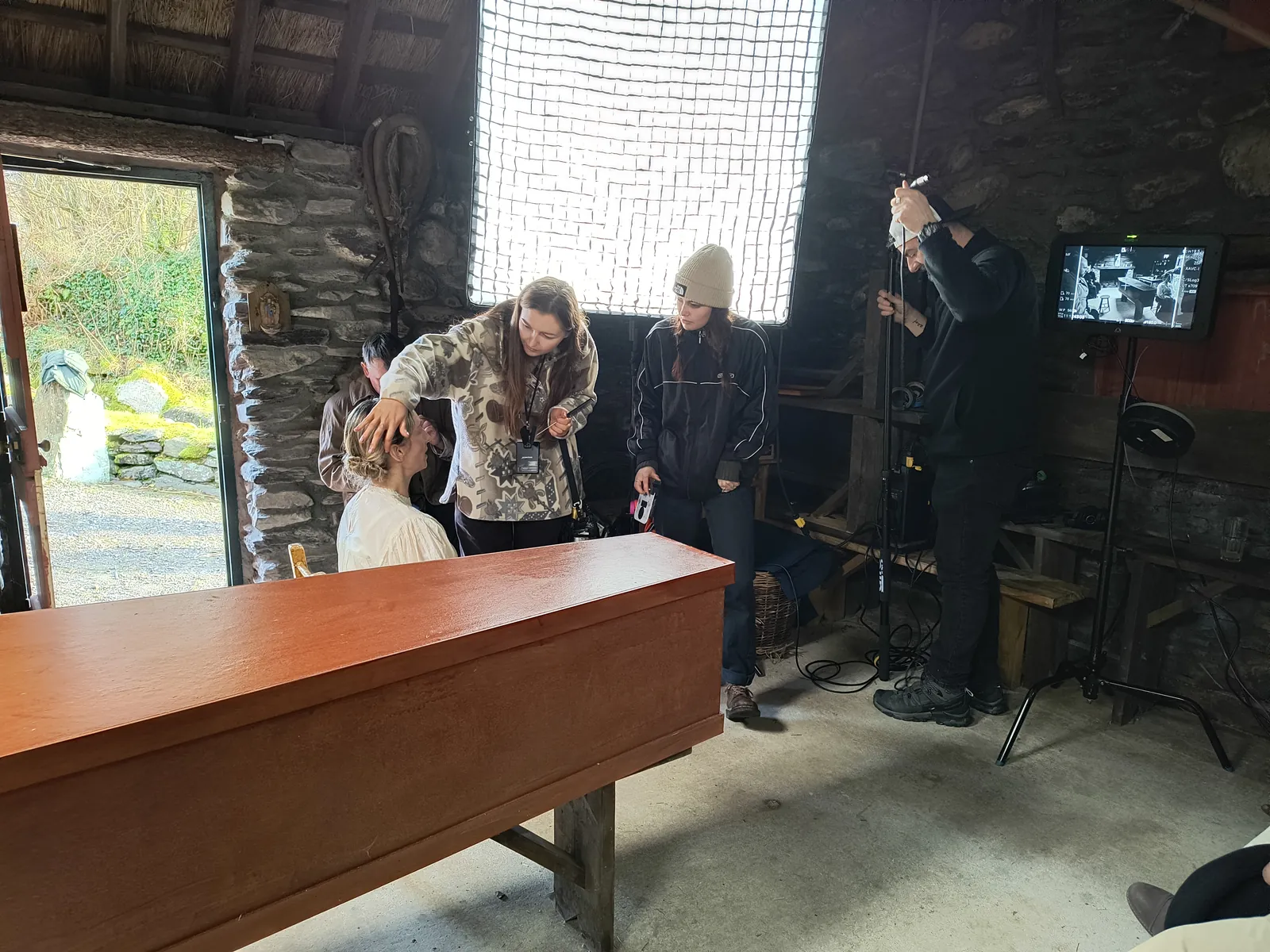
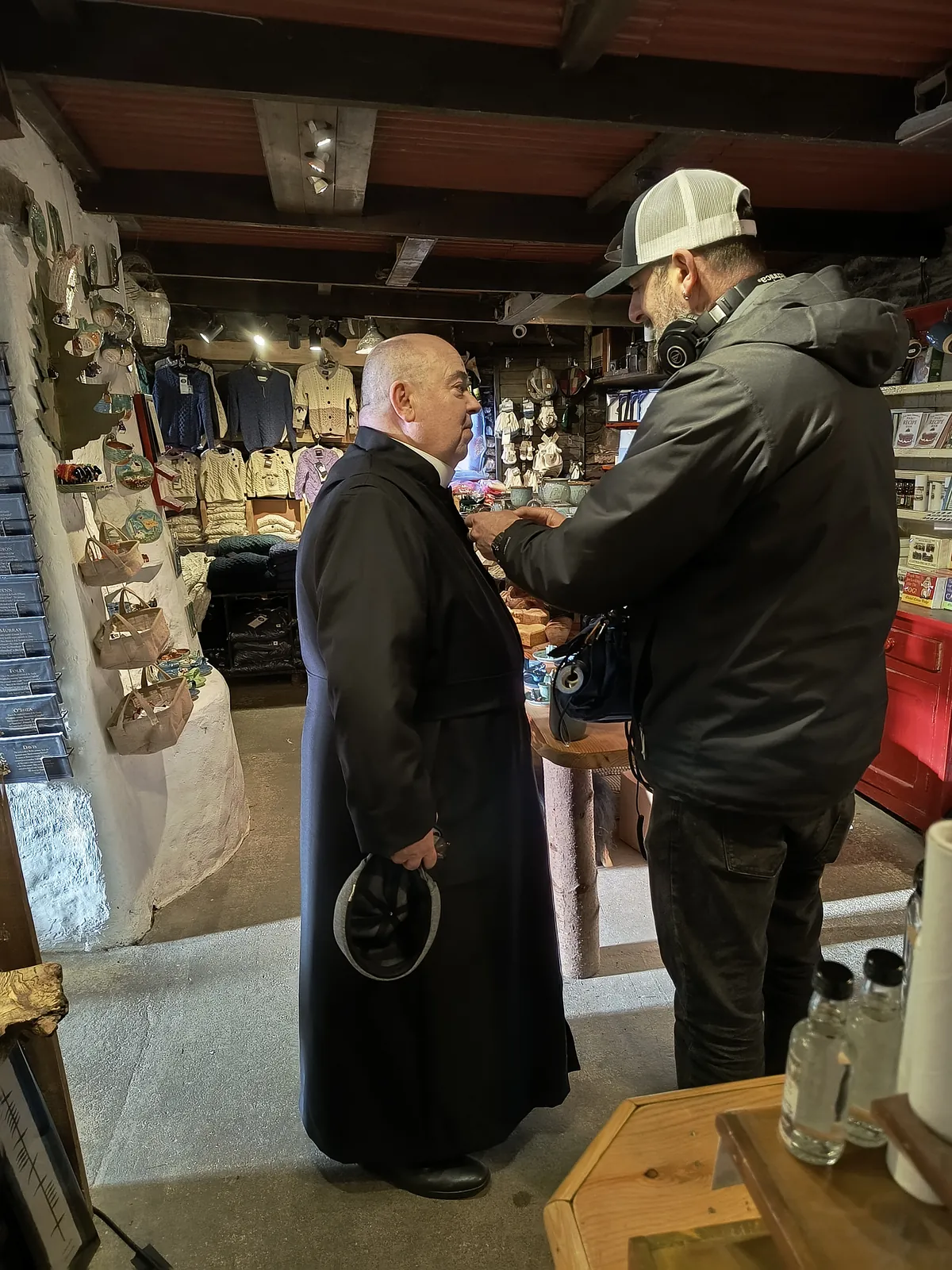
Day 1, 11:12. Maeve O’Sullivan applies make-up, with production assistant Serena Clarke and sound recordist Colin Morrison in the wake room. Photo: Seán Breathnach.
MON 20 JAN · 11:12
Lighting a wake with one window.
1
The window is the light
A large soft light with a fabric grid stands in the window. It turns one lamp into a wide, even glow, the way daylight falls through a cottage window. The grid stops the light spilling everywhere.
2
Black and white, already
The monitor used the black-and-white LUT the filmmakers planned as the base for the finished film. Brendan Bourke at Hudsucker Media later completed the colour grade.
3
The coffin
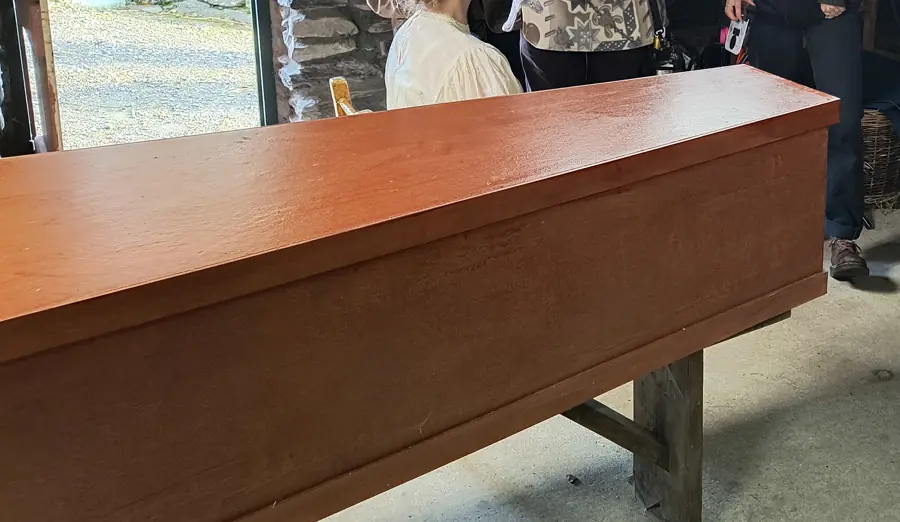
Built for the film by a local carpenter. On set it is bright orange varnished wood. Keep that in mind for the next pair of photos.
4
Make-up at the coffin’s edge
Touch-ups happen between set-ups, inches from the coffin.
ON SET · JANUARYON SCREEN · AFTER THE GRADE
COLOUR BECOMES TONE
Orange on set. Grey on screen.
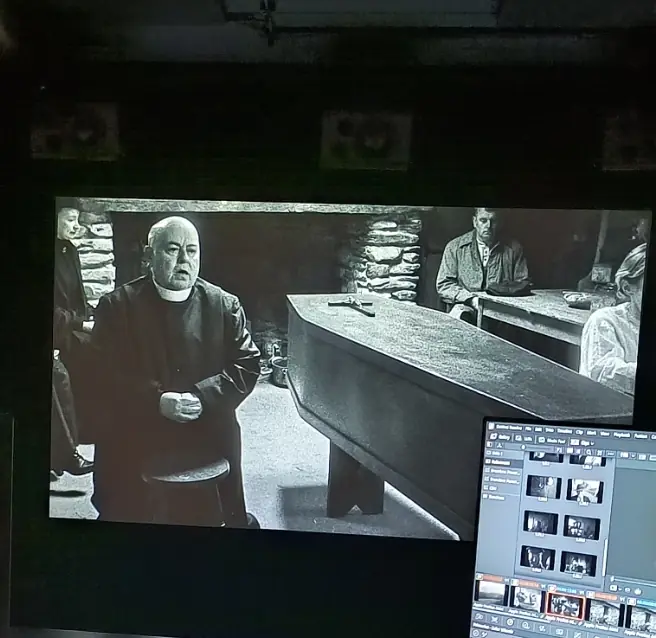
Black and white keeps only brightness. The warm orange coffin turns into a dense grey that sits with the stone walls, and it becomes the heaviest object in the room.
→the coffin, before and after
Look for this in the film: which objects pull your eye once colour is gone?
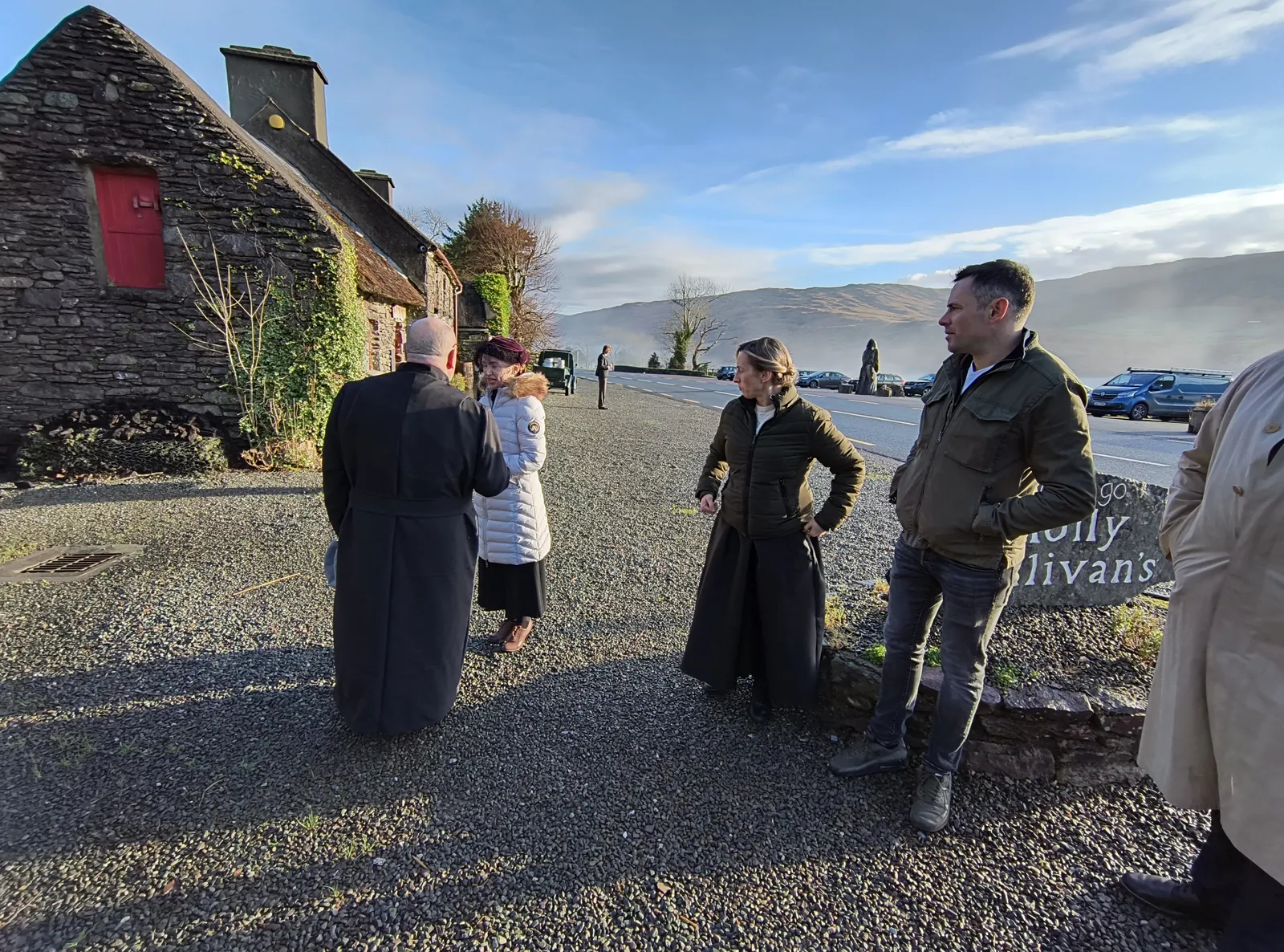
Day 1, 10:35. Between set-ups at Molly Gallivans. Photo: Seán Breathnach.
MON 20 JAN · 10:35
Keeping 2025 out of frame.
1
A main road, metres away
Cars and vans pass just behind the cast. In the film you never see them. Every camera position had to point away from the present day.
2
Coats over costumes
Between takes, modern winter coats go on over long period skirts. It’s January in Kerry.
3
The cottage
Molly Gallivans provided the stone walls, slate roof and red half-door that help establish the film’s period setting.
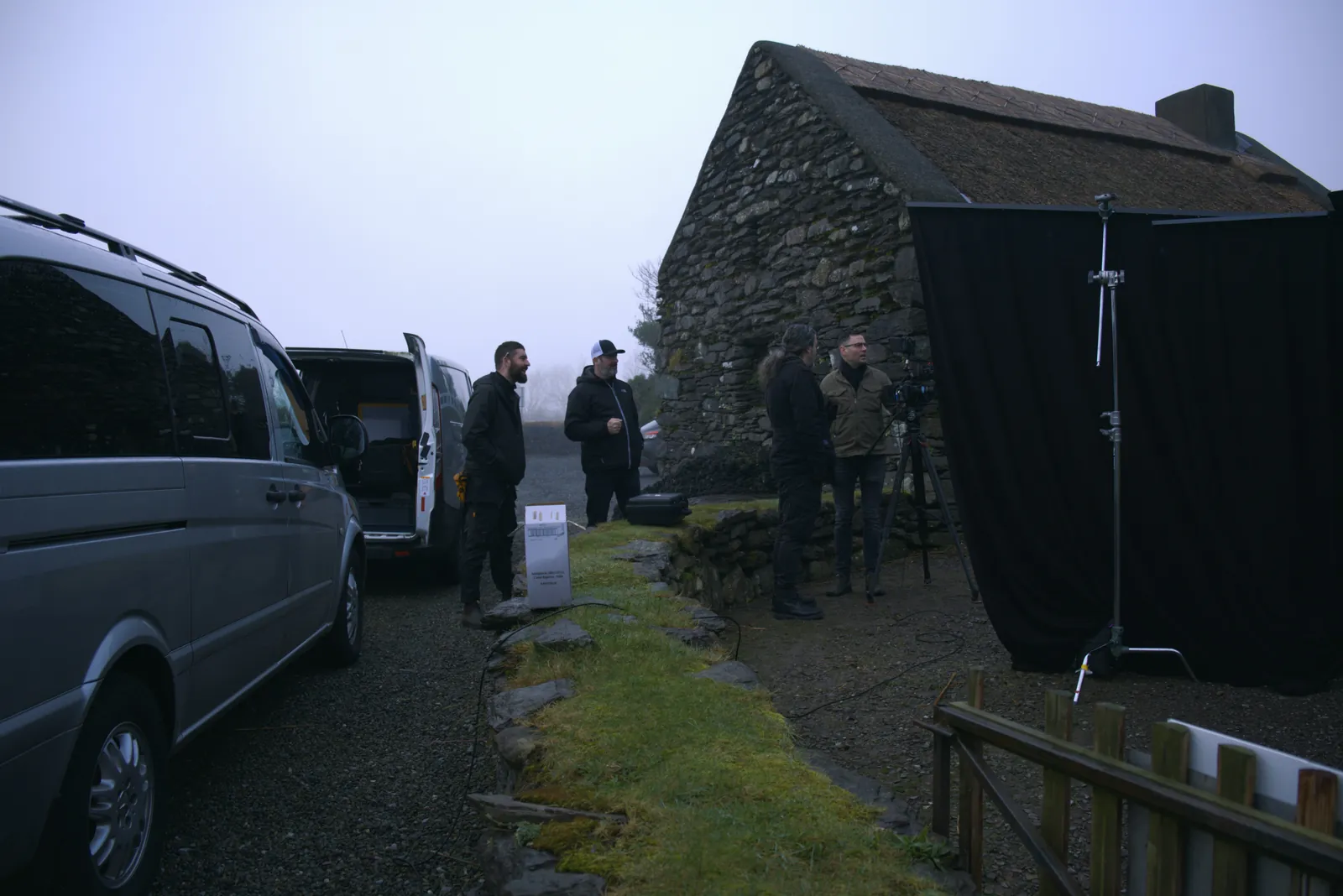
Day 2. Black drapes over the doorway block the daylight, so the crew controls every bit of light inside. Photo: Gearóid Murphy.
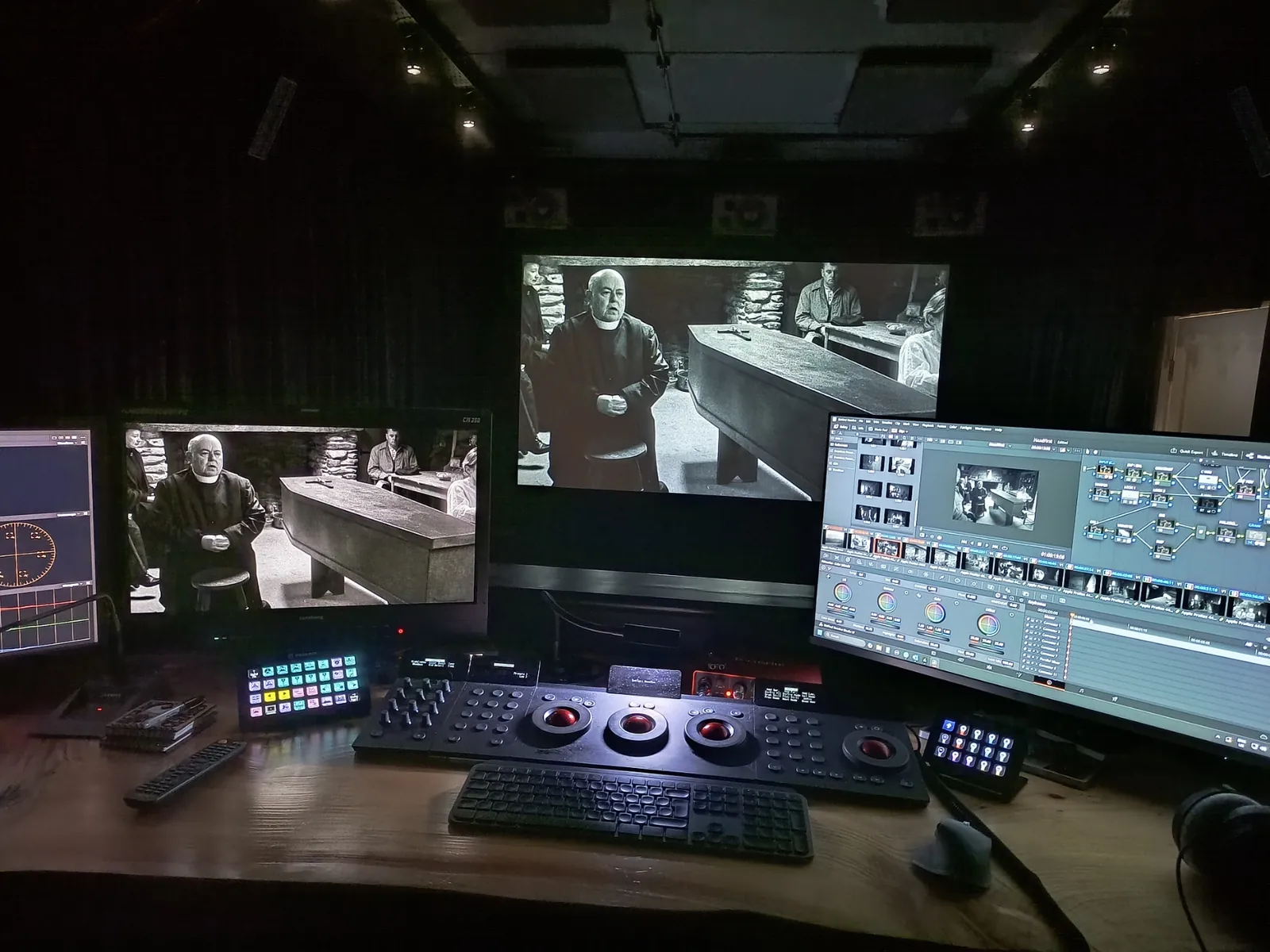
Wed 5 March 2025. The wake scene during the grade by Brendan Bourke at Hudsucker Media. Photo: Seán Breathnach.
WED 5 MAR · 16:07
Six weeks later, finding the greys.
1
Scopes
Graphs of brightness. The colourist reads these as well as the picture, so the blacks and whites land exactly where they should.
2
The wake, finished
The priest stands by the coffin. Compare the stone walls here with the photo from the set.
3
Built in steps
Each box is one adjustment. The look of the film is a chain of small decisions.
4
Three trackballs
One each for shadows, midtones and highlights. In black and white, those three ranges are the whole palette.
The people between takes.
DAY 1 – DAY 2
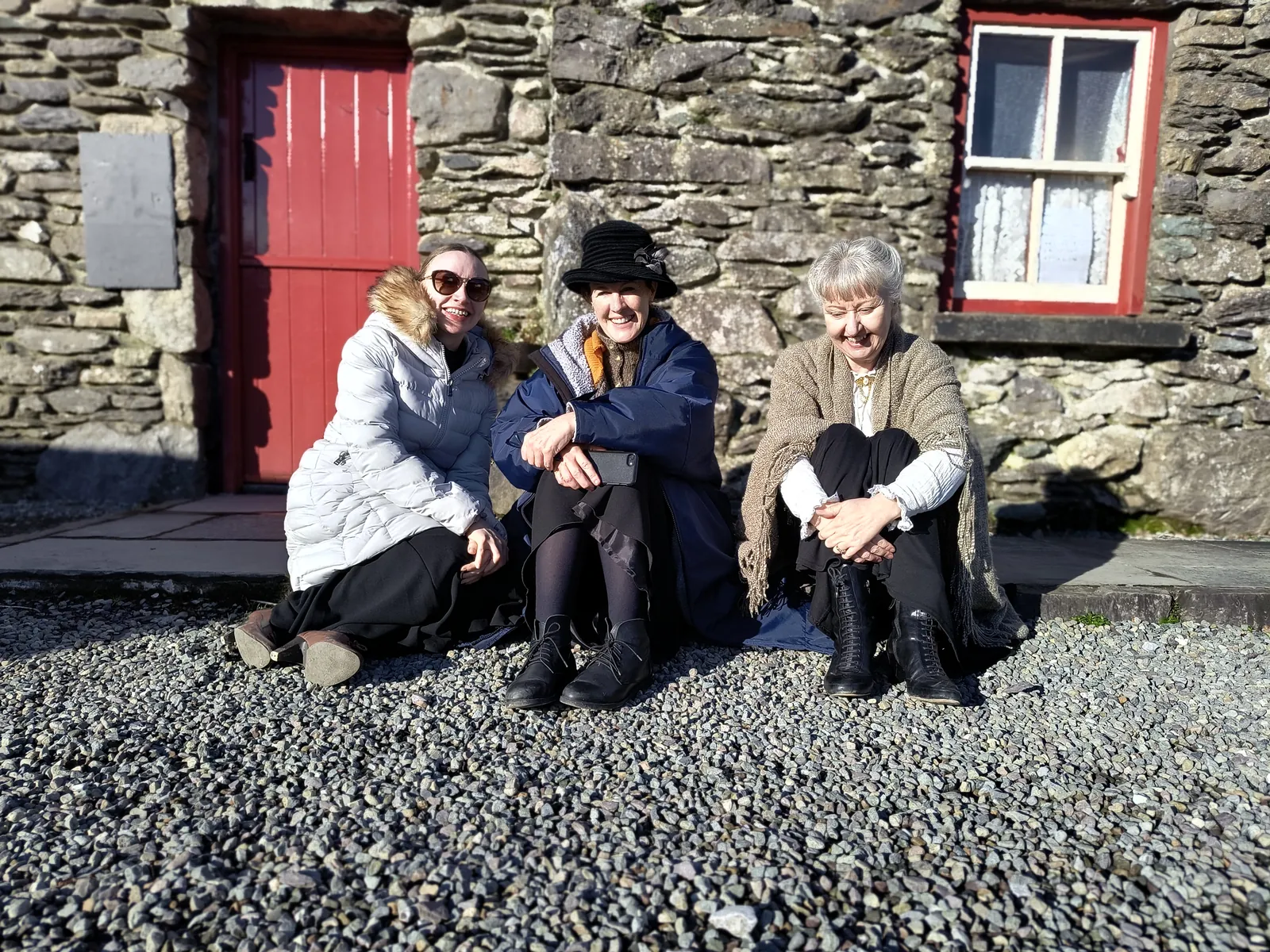
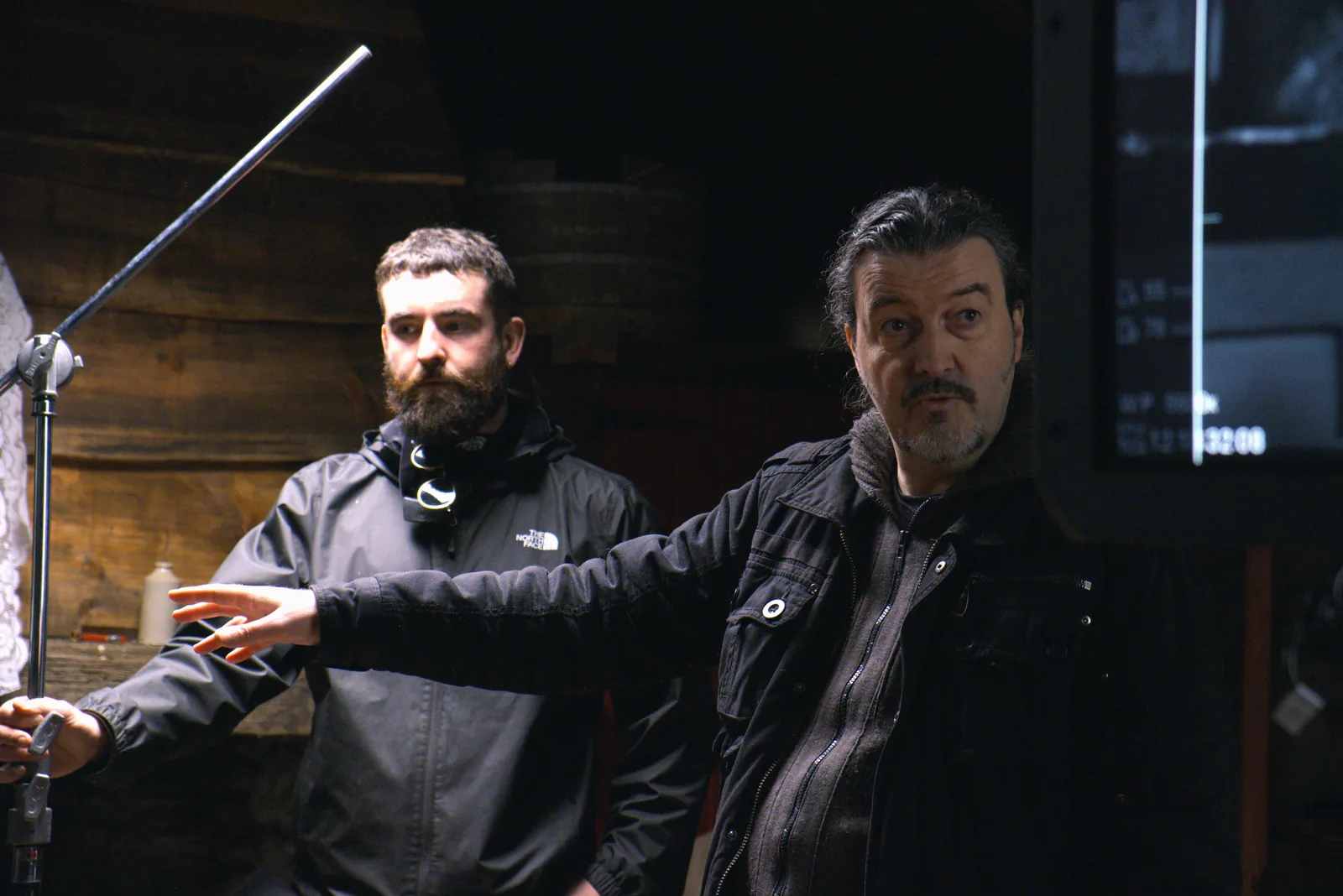
10:22. Sound recordist Colin Morrison checks Ciaran’s microphone before a take. Photo: Seán Breathnach.Day 2, 13:45. Irene Kelleher, Jean Van Sinderen Law and Judy Donovan take a break in the sun. Photo: Seán Breathnach.Day 1. Jamie Kennedy Boyle (lighting) and Seán Breathnach watch the take on the monitor. Photo: Gearóid Murphy.
05 / THE PEOPLE BEHIND ITNOT JUST THE NAMES AT THE END.
A film is never one person.
From the first idea to the final cut. Meet the names behind Head First.
Credits from the film’s IMDb page and Seán Breathnach. Made by Ego Productions Ireland.
06 / AFTER THE FILMA CASTME VIEWING NOTE
The picture stops. The conversation doesn’t have to.
You do not need to know every technical term to notice what a film is doing.
Watch someone who isn’t speaking.+
On a second viewing, pick one mourner in the background. Who do they look to when the talk turns to spirits? Listening can change the temperature of a room before anyone says another line.
Notice what the room believes.+
The rules of a wake are never explained, but everyone in the room knows them. Look at how the film lets you feel a custom being broken before you understand it. These are questions for your own viewing, not a statement of the filmmakers’ intention.
Watch the credits, too.+
Pick a department you had not thought about before: costume, design, score. Go back to one moment and consider what that team added. A short is a good place to discover how many creative jobs make one image possible.